
Daylight Cannot be Saved
The real curiosity is that we keep fighting over which flavor of wrong the clock should be, instead of asking whether the clock needs to be wrong at all.
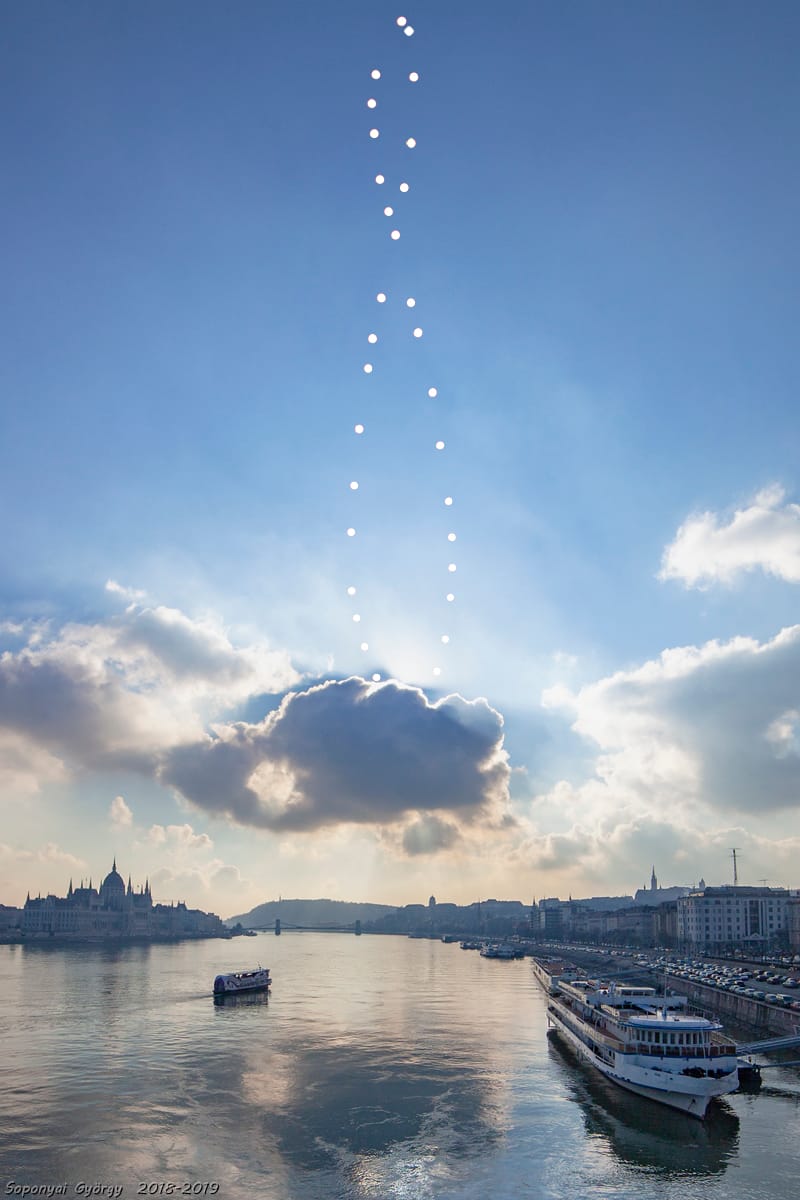
A review of David Prerau's Seize the Daylight: The Curious and Contentious Story of Daylight Saving Time
For nearly all of human history, our clock was the closest star in our sky. Farmers rose at dawn, worked until dusk, and marked the middle of the day when the sun reached its highest point overhead. Nobody needed to coordinate with farmers three hundred miles away, so nobody needed to agree on what "noon" meant beyond their own horizon. The synchronization tax — the cost of resolving divergence between one community's description of time and another's — was effectively zero, because communities had no reason to synchronize at all.[1]
David Prerau's Seize the Daylight tells the story of these breaks with an eye for the absurd detail that accumulates whenever governments try to legislate what time it is. Benjamin Franklin started the mischief, waking early one Paris morning and calculating how many candles the city could save if its residents simply got out of bed with the sun. An Englishman named William Willett picked up the crusade a century later, appalled that Londoners were sleeping through perfectly good morning light, and published a pamphlet in 1907 called "The Waste of Daylight." He died before any government acted on it. Kaiser Wilhelm's Germany, desperate to conserve fuel during World War I, finally implemented the shift in 1916. The United States followed in 1918. And the fighting has not stopped since.
Prerau narrates these battles with what one reviewer called an "admirable evenhandedness," laying out each side's arguments without editorializing. Farmers opposed daylight saving because cows and dew don't read clocks. Movie theaters opposed it because summer audiences preferred the dark. In 1965, Minneapolis and St. Paul couldn't agree on when to spring forward, creating a metropolitan area with two different times. In Hopkinton, Iowa, banks closed at night on standard time but opened each morning on daylight saving time. A man born just after midnight DST argued his way out of the Vietnam draft by insisting that under standard time, he'd been born the previous day — which carried a much higher lottery number. These are the anecdotes of a system that has never quite worked and that nobody has managed to kill.
But Seize the Daylight works best as a history, not as a diagnosis. Prerau catalogues the symptoms without identifying the underlying disease, so let me propose one. The entire history of human timekeeping — from unequal hours to mean solar time, from three hundred local noons to four continental time zones, from standard time to daylight saving time — is a series of coarse-grainings driven by the same force: the need to reduce the synchronization tax between communities whose descriptions of "what time is it" diverge.
The railroads made this force visible. By the 1880s, North America ran on over three hundred local solar times — a coordination catastrophe that worsened every year the rail network grew denser. In 1853, two trains collided head-on in Rhode Island because their conductors' watches showed different times, killing fourteen passengers. The railroads solved the problem in 1883 by coarse-graining: they collapsed those three hundred local times into four continental zones, each pegged to a meridian of longitude and offset by exactly one hour. The maximum divergence between your clock and your local sun was about thirty minutes — an acceptable fiction. Congress codified the system into law in 1918, bundling it with the new wartime energy-saving measure that Prerau's book chronicles.
DST was itself a synchronization hack. Germany shifted its clocks forward an hour to squeeze more usable daylight out of the evening, reducing the energy spent on artificial lighting. The idea assumed a population whose energy budget was tight enough that an hour of shifted sunlight mattered — and whose economic activity was bound closely enough to the solar cycle that clock time and sun time needed to stay roughly aligned. Both assumptions held for most of the twentieth century. They no longer hold today.
Two things have changed. First, transmission costs — the cost of moving a time signal from one place to another — have collapsed to near zero. Your phone knows the time in Tokyo not because you looked up a conversion table but because a satellite told it. Second, the energy budget for artificial lighting and climate control has expanded so dramatically that almost no economic activity in the developed world depends on when the sun happens to be overhead. We work in buildings with electric lights. We communicate across twelve time zones in a single Slack channel. The constraint that once made solar-time correspondence valuable — limited energy and limited reach — has dissolved.
Yet we still maintain twenty-four time zones and a biannual clock change. The synchronization tax of this legacy system is now substantial. Every spring and fall, the United States pays a measurable cost in heart attacks, traffic accidents, lost productivity, and medical errors — all documented consequences of forcing millions of people to abruptly shift their sleep schedules by an hour. Nineteen states have passed legislation to stop changing their clocks, and both chambers of Congress have repeatedly introduced the Sunshine Protection Act to make DST permanent. As of March 2026, these efforts remain stalled in committee.
But the debate between permanent standard time and permanent daylight saving time misses the deeper point. The real question is not which offset from solar time we should freeze. The real question is why we maintain any offset-based system at all.
We could all run on UTC.
The objection comes immediately: don't we need time zones to coordinate around circadian rhythms? If I'm scheduling a call with someone in London, don't I need to know they're five hours ahead so I don't wake them at 3 AM?
This objection, examined closely, inverts the actual problem. The reason cross-timezone scheduling feels difficult is precisely that everyone uses a different clock. When your colleague in London says "let's meet at 2 PM," you have to perform a mental conversion — and that conversion requires you to remember London's offset, whether DST is currently active in both countries (the UK and US switch on different dates), and whether your colleague meant their 2 PM or yours. The time zone system does not simplify coordination. It distributes a single global synchronization problem across billions of individual mental arithmetic problems.
If everyone ran on UTC, you would learn, over the course of a few weeks, roughly when people in different cities eat dinner, go to sleep, and wake up — the same way you already know that New Yorkers eat dinner later than Midwesterners despite sharing a time zone. You would develop an intuitive map: "My London colleague works from about 09:00 to 17:00 UTC. My Tokyo colleague works from about 00:00 to 08:00 UTC." No conversion necessary. And for the cases where you weren't sure, a simple lookup table — keyed to purpose rather than to an arbitrary offset from a meridian in Greenwich — would do the job far better than our current system.
A second objection: people would resist calling "noon" a time when the sun is nowhere near its highest point. But they already do. In Anchorage, Alaska, the sun doesn't reach its zenith until nearly 1:30 PM during standard time. In western China, where Beijing time governs a country spanning five natural time zones, solar noon arrives as late as 3 PM. The fiction that clock noon corresponds to solar noon is already broken in practice. UTC would merely stop pretending otherwise.
A third objection: the transition costs would be enormous. Every database, airline schedule, financial exchange, and legal contract that references a time zone would need updating. Software developers who have ever dealt with time zone bugs — an impressively battle-scarred community — might argue this alone disqualifies the idea.
But notice what this objection actually says. It says: the synchronization tax we have already paid, in the form of a massive global infrastructure built around twenty-four time zones, creates a sunk-cost barrier to adopting a system that would reduce the synchronization tax going forward. This is not an argument that time zones are good. It is an argument that path dependence is powerful. And path dependence, while real, is not destiny. The railroads overcame three hundred local times in a single day in 1883. The transition was disorienting — newspapers called it "the Day of Two Noons" — but it stuck, because the benefits of coordination outweighed the costs of nostalgia for local solar time.
We face the same choice now, at a larger scale. The synchronization tax of maintaining twenty-four time zones and a biannual clock-switching ritual is not zero. It shows up in missed meetings, jet-lag-compounding confusion, software bugs that crash financial systems, and a twice-yearly public health cost that we have simply agreed to tolerate. The energy budget that once justified tracking the sun has been spent. Noon is a vestigial organ — a relic of a constraint that no longer binds.
Prerau's book, read twenty years after its publication, offers an inadvertent argument for this conclusion. The history he tells is not a story of wisdom refined over centuries. It is a story of kludge upon kludge — each generation patching the last generation's compromise with a new compromise that introduces new coordination costs. The book's subtitle calls DST "curious and contentious," and so it is. But the real curiosity is that we keep fighting over which flavor of wrong the clock should be, instead of asking whether the clock needs to be wrong at all.
Let's pay the synchronization tax once now, and just be done with it. Our legacy system isn't worth its maintendance costs.
Before mechanical clocks, the hours themselves expanded and contracted with the seasons. Medieval Europeans divided daylight into twelve equal parts and nighttime into twelve more, so a summer "hour" in London lasted roughly eighty minutes while a winter "hour" shrank to about forty. Church bells rang the canonical hours — Prime at dawn, Terce at mid-morning, Sext at noon, Nones in the afternoon, Vespers at sunset — and everybody understood that these intervals stretched and compressed as the days lengthened and shortened. The very unit of time was synchronized to the sun's arc, not to any abstract standard. Mechanical clocks, by imposing a fixed sixty-minute hour, broke this coupling — the first in a series of breaks between human timekeeping and solar reality that Prerau's book traces to the present. ↩︎